
There is something quietly fascinating about the gap between how much brands spend on influencer marketing and how little rigour goes into the most important decision in the entire process: choosing who to work with.
Budgets have grown, platforms have multiplied, and reporting has become more sophisticated.
And yet the process of selecting influencers, the decision that determines whether any of it works, has remained largely unchanged. Someone opens a database, filters by follower count, browses profiles, and makes a judgment call based on what looks right.
AI influencer matching is the first meaningful attempt to close that gap.
Not by automating the creative side of influencer marketing, but by bringing the same data rigour to influencer selection that brands already apply to every other channel they invest in.
What AI Influencer Matching Actually Means
AI influencer matching uses artificial intelligence to analyse a campaign brief and identify the influencers most likely to deliver against that specific objective.
The way AtisfyReach approaches this is worth understanding because it illustrates what the technology is actually capable of when it is built around matching rather than discovery.
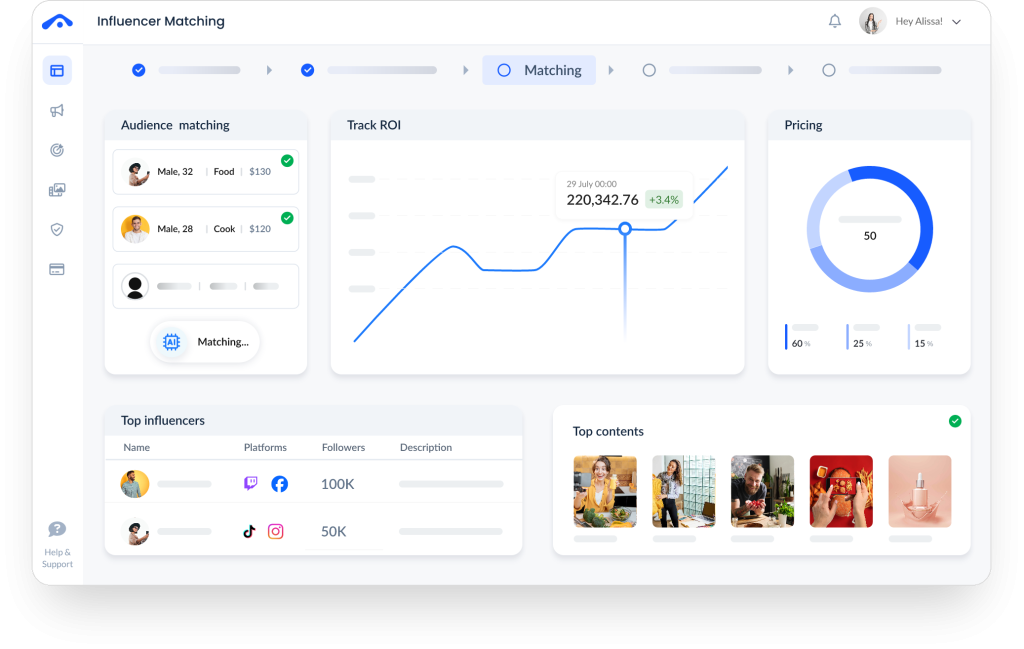
When a brand sets up a campaign on AtisfyReach, they input their target audience, objective, platforms, brief and budget. The platform’s AI reads all of that and scores every influencer in its network verified influencers against it, drawing on data that goes well beyond what a profile page reveals.
The kind of data being analysed typically includes:
- Audience demographics and how closely they match your target customer
- Engagement history over time, not just the most recent posts
- Past campaign performance across similar briefs and categories
- Pricing relative to market benchmarks
- Predicted impact on your specific campaign objective
What makes this different from a standard database search is that the AI is not returning results based on keywords or filters. It is making a judgment about fit, one that is informed by first-party data collected directly from influencers through authenticated API integrations.
What comes back is not a list of popular influencers in the brand’s category, but a set of data-backed, matched influencers who are statistically more likely to perform for that specific objective.
Why This Matters More in 2026
The interesting thing about where influencer marketing sits right now is that the expectations placed on it have changed considerably, but the infrastructure supporting influencer selection largely has not.
Brands are allocating serious budgets to influencer marketing and being held accountable for the results in ways they were not three or four years ago.
CMOs want to see ROI and clients want proof of performance. And the answer to those questions has to start with whether the right influencers were chosen in the first place.
AI influencer matching gives brands a more defensible basis for that decision. The selected influencers are matched because the data supports them, not because they looked good in a brief review on a Friday afternoon or after a one-off viral campaign.
It also addresses three problems that have quietly undermined influencer campaign performance for years.
Fake followers, AI-generated activity, and manufactured engagement
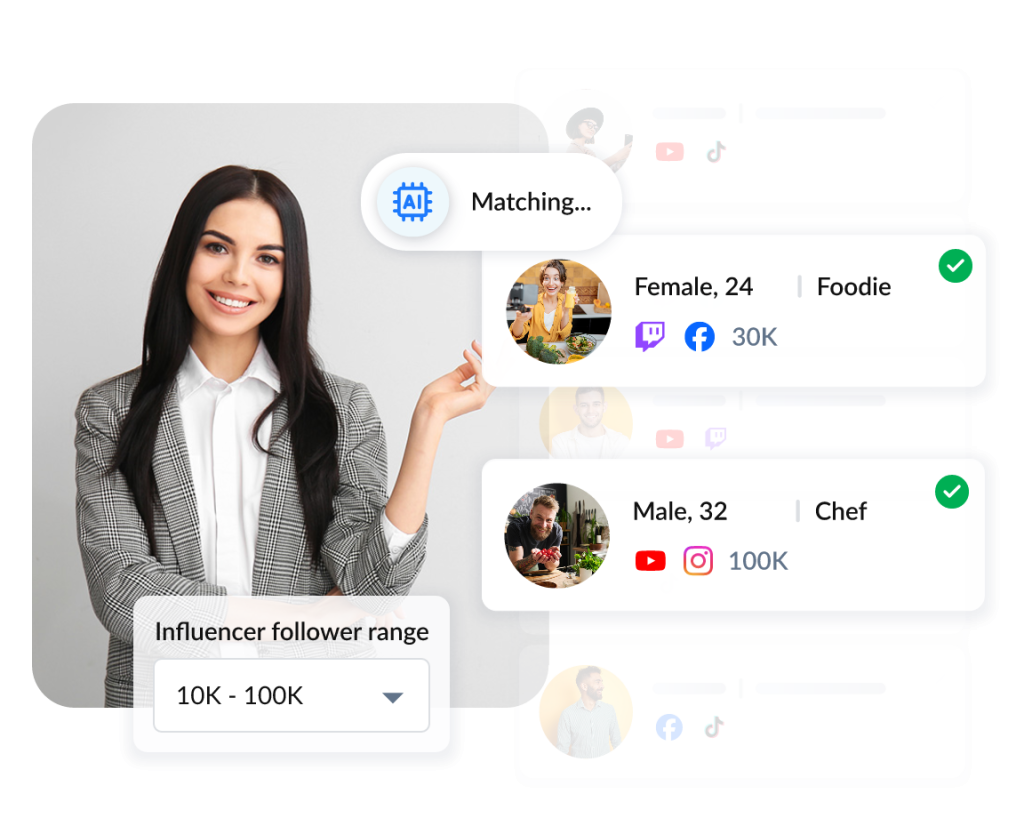
This is where the problem has gotten meaningfully harder. Inflated engagement and inauthentic audiences have always existed, but the tools being used to generate them have become significantly more sophisticated.
AI-generated comments, automated engagement pods, and bot networks that mimic real user behaviour are now common enough that manual auditing struggles to keep up.
AtisfyReach’s machine learning models screen for these signals continuously across the entire network, tracking engagement patterns over time rather than at a single point, which makes detection considerably more reliable than manual review.
Consistency
Manual selection is inherently variable. The quality of the shortlist depends on who is doing it, how much time they have, and how familiar they are with the category.
AtisfyReach applies the same matching criteria to every campaign, which matters particularly for brands running campaigns across multiple markets or managing influencer selection across different team members.
Scalability
There is a meaningful difference between managing a campaign with ten influencers and one with a hundred. Manual processes do not scale cleanly.
Because AtisfyReach automates end-to-end, including matching, assignment, and replacement, brands can run campaigns at any volume without the execution burden growing proportionally with the size of the campaign.
A Practical Example of How It Works
Consider a baby care brand launching a new range of products and running an awareness campaign on Instagram targeting parents of children ages up to five in Singapore.
They have a budget of $10,000 and a four-week window.
With manual search, a marketing manager spends two to three days browsing profiles, looking for parent influencers with the right demographic, cross-referencing engagement rates, and building a shortlist that feels like a reasonable fit.
While the selection can be reasonable, there is no reliable way to know in advance which of those influencers will actually resonate with a parenting audience and which will underperform despite looking right on paper.
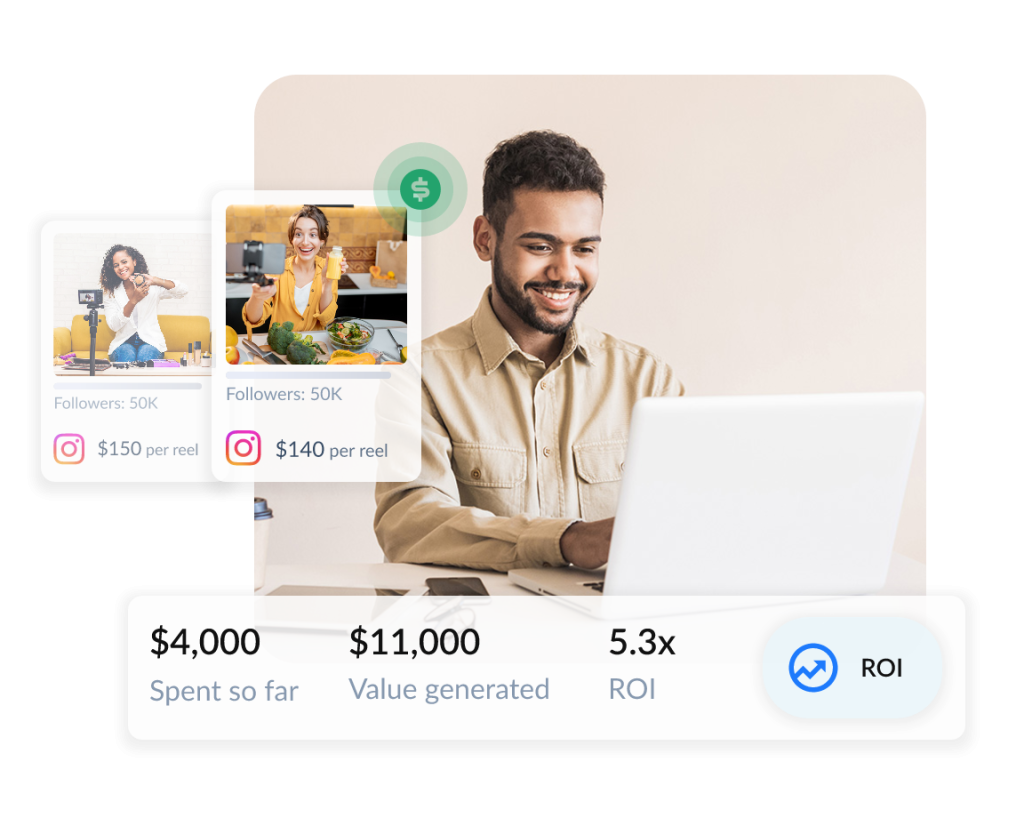
With AI influencer matching, those same parameters go into the platform and the AI scores the entire network against them. Influencers whose audiences are genuinely made up of young parents in Singapore, who have a track record of driving engagement on parenting and family lifestyle content, and whose rates align with the available budget are matched to the campaign.
Everything that follows, like contracts, reporting, budget reallocation, and payments, is handled automatically.
The efficiency gain is real but almost secondary. What matters more is the quality of the decision being made before a single dollar of campaign budget is committed.
Why Brands Are Investing in AI Influencer Matching Now
What is particularly unique about the current moment is that AI influencer matching is not being adopted because it is “new technology”.
It is being adopted because the alternative, manual selection built on visible metrics and gut feel, is producing results that are increasingly hard to defend.
A few reasons it is becoming harder to ignore:
- Influencer marketing budgets are increasing and so is the pressure to prove ROI
- Fake followers and inflated engagement are increasingly sophisticated and harder to catch manually
- Multi-market campaigns require consistent selection criteria that manual processes cannot reliably maintain
- Pre-campaign forecasting gives brands visibility on expected performance before a single dollar is spent
And this is why platforms like AtisfyReach is built around this model. Every influencer in the network is verified through first-party data, scored across various performance dimensions, and matched to campaigns based on predicted impact rather than popularity.
Brands running campaigns through the platform see pre-campaign forecasts of reach, engagement rate, and cost per outcome before they commit a budget.
What Better Influencer Selection Actually Changes
AI influencer matching is not a replacement for marketing judgment. It is a tool that makes that judgment more informed, more consistent, and more defensible.
For brands scaling influencer marketing, managing campaigns across multiple markets, or simply trying to get more predictable results from their influencer spend, it is worth understanding how it works and what it makes possible.
The brands already using it are not doing so because it is new. They are doing so because it works. Learn more about how AtisfyReach can help you scale your campaigns more intelligently and effectively with AI influencer matching.