Influencer marketing planning often starts with what you already know: previous campaign results, available budget and what has worked before.
All useful information.
But change the audience, platform, content type or campaign requirements, and previous results may not tell you very much about what happens next.
Campaign performance forecasting estimates your campaign’s results before launch. Instead of relying entirely on what happened last time, you can see what this campaign is likely to achieve before you spend on it.
What Is Campaign Performance Forecasting in Influencer Marketing?
Campaign performance forecasting uses campaign and influencer data to predict how an influencer marketing campaign will perform before it launches from reach, engagement and clicks.
With the right forecasting tool, marketers can test different campaign configurations and see how choices such as platform and content type change the predicted results.
A forecast’s value comes down to two things: prediction and what you can do with it.
Why Forecast Influencer Campaign Performance Before Launch?
Campaign analytics traditionally answer questions once a campaign is running or after it has finished:
- How much reach did we generate?
- What engagement did we receive?
- What did our spending achieve?
By then, the decisions behind those results have already been made.
This is particularly important when the next campaign looks different from the last one:
- Entering a new market: a new audience with no campaign history to draw on
- Trying a new platform or content type: moving budget from Instagram to TikTok, or testing a different content format.
- Getting budget signed off: giving leadership a predicted outcome, not just a spend figure.
Historical performance still provides context, but it does not have to be the only thing informing the next campaign.
Instead of only asking “What happened last time?”, teams can also ask:
“What could this campaign achieve?”
That is where forecasting earns its place in campaign planning.
How Campaign Forecasting Works on AtisfyReach
With AtisfyReach, you see the campaign ROI before a dollar is spent. Forecasting is built into campaign setup, so the decision to run a campaign is based on a number, not a hope.
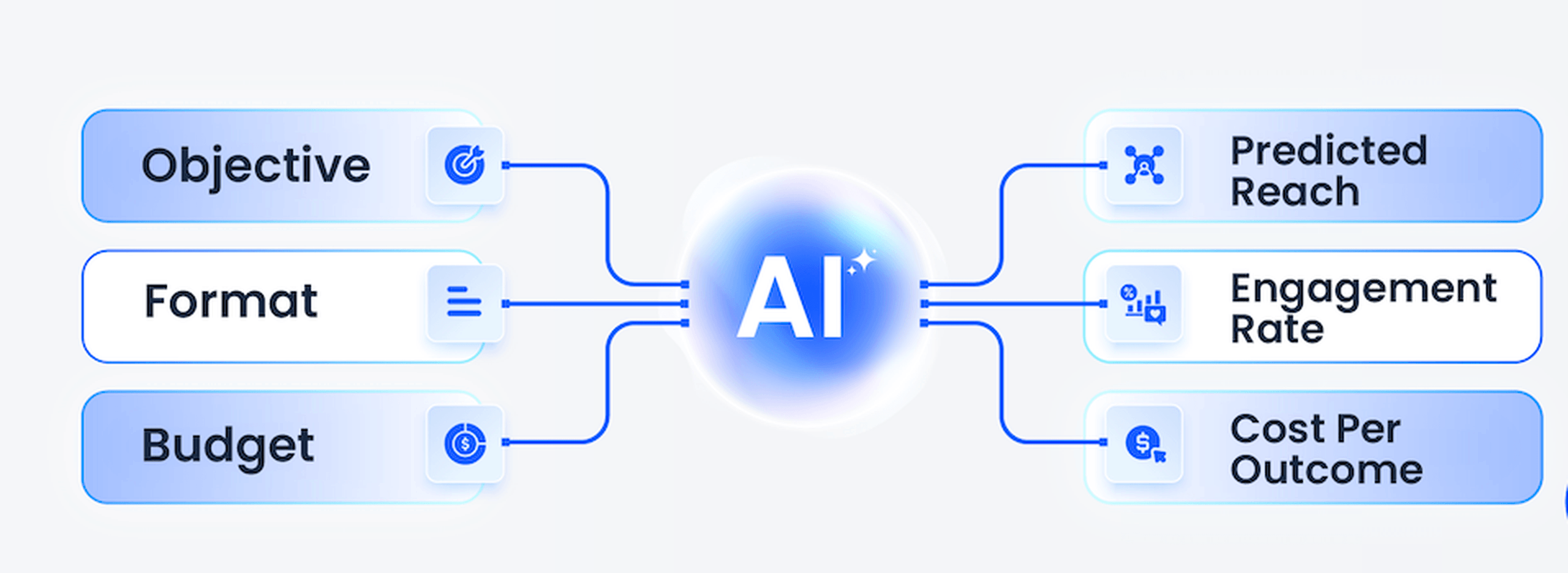
Here’s how it works:
- Set up your campaign. Enter your objectives, audience targeting, budget and requirements.
- Choose a configuration. Select a platform and content type combination.
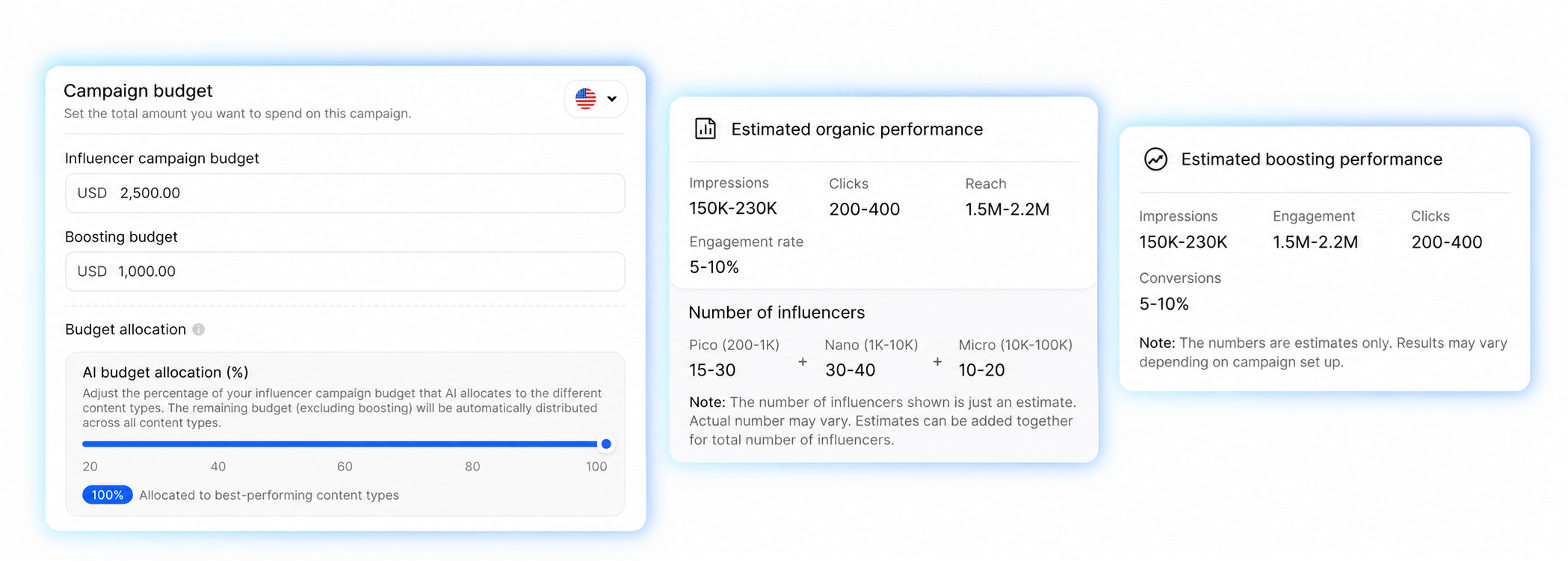
- See the predicted results. AtisfyReach forecasts estimated reach, engagement and clicks.
- Compare and refine. Try other platforms and content type combinations to see how each changes the forecast.
- Launch with a benchmark. Once the campaign is live, daily reporting tracks actual results, so you can see how performance is tracking against what was predicted.
What makes the forecast meaningful is where it comes from. It runs on the same profile analysis that powers AtifsyReach’s influencer allocation and performance-based influencer pricing, built on first-party data from influencers who connect their social accounts directly through Atisfyre, Atisfy’s creator app.
What Should You Look for in an Influencer Marketing Forecasting Tool?
A good forecasting tool gives you enough information to understand the prediction and use it to shape your campaign. Here are four questions worth asking.
1. Can You Compare Different Campaign Configurations?
A single predicted number tells you what the current setup could achieve. Being able to compare configurations gives you something to work with.
For example, can you evaluate different platforms or content types and see how each choice changes the predicted performance?
How AtisfyReach handles this:
AtisfyReach’s campaign forecasting gives estimates for each campaign configuration, so teams can compare platform and content type combinations during set up and choose the one with the strongest predicted outcome.
A forecast becomes much more useful when changing the inputs gives you something meaningful to compare.
2. What Data Is the Forecast Built On?
The prediction is only as good as the data behind it.
How AtisfyReach handles this:
AtisfyReach has a database of more than 60 million influencer profiles, including verified influencers who provide first-party data by connecting their social accounts directly through Atisfyre, Atisfy’s creator app. This gives the forecast real performance data to work from, not just public follower counts.
3. Can You Act on the Prediction?
If the predicted result is not what you expected, what can you actually change?
- Can you compare another platform?
- Try a different content type?
- Review another campaign configuration?
A useful forecast should give teams information they can act on, rather than another metric to report.
How AtisfyReach handles this:
As forecasting is part of campaign setup, you can change the configuration, see the new forecast immediately and launch the version that fits your objective, all before a dollar is spent.
That is the difference between predictive data that looks impressive and predictive data that has a job to do.
4. Is the Forecast Connected to Execution?
In many tools, a forecast is a standalone number. Once the campaign launches, it plays no further part.
Look for a platform where the intelligence behind the forecast keeps working through the campaign, informing which influencers are selected, what they are paid and where the budget goes.
How AtisfyReach handles this:
The same profile analysis that produces the forecast also allocates influencers to perform, benchmarks each influencer’s rate against real campaign data rather than follower count and powers AI budget optimisation during execution. The forecast isn’t the end of the analysis. It’s the start of the campaign.
Campaign Forecasting vs Budget Optimisation: What Is the Difference?
Campaign forecasting and budget optimisation happen at different stages of an influencer campaign.
Forecasting happens during planning, to shape the setup. Budget optimisation happens during execution, to make the most of the budget once the results start coming in.
| Stage | What happens | Question it answers |
| Before launch | Campaign forecasting | What will this campaign achieve? |
| During execution | Budget optimisation, manual or AI | Where should the budget go? |
| During execution | Daily performance tracking | How is the campaign performing? |
| After the campaign | Campaign reporting | What did the campaign achieve? |
For budget optimisation, teams choose how involved to be:
- Manual budget allocation: keep direct control over how the campaign budget is distributed
- AI budget optimisation: AtisfyReach allocates a designated percentage of the campaign budget to the best-performing content types.
How AtisfyReach handles this:
AtisfyReach provides campaign forecasting and AI budget optimisation in the same campaign workflow, powered by the same performance intelligence. So the insight that shapes your campaign before launch keeps working on it after launch.
A Forecast Is Only as Useful as What You Do With It
Campaign performance forecasting can close an important information gap in campaign planning.
Historical results tell you what happened before. Campaign reporting tells you what happened after. Forecasting gives you another source of information for the decisions in between.
That means every campaign can start with a clear view of what its setup should achieve and a decision based on a number, not a hope.
Want to see what your influencer campaign could achieve before launch? Book a free AtisfyReach demo.